A complete history of the golf tee.
From a Boston dentist's 1899 patent to the launch-monitor-calibrated tees of 2026. The story of how golfers stopped piling sand and started reaching for a peg.
Before the tee: sand piles
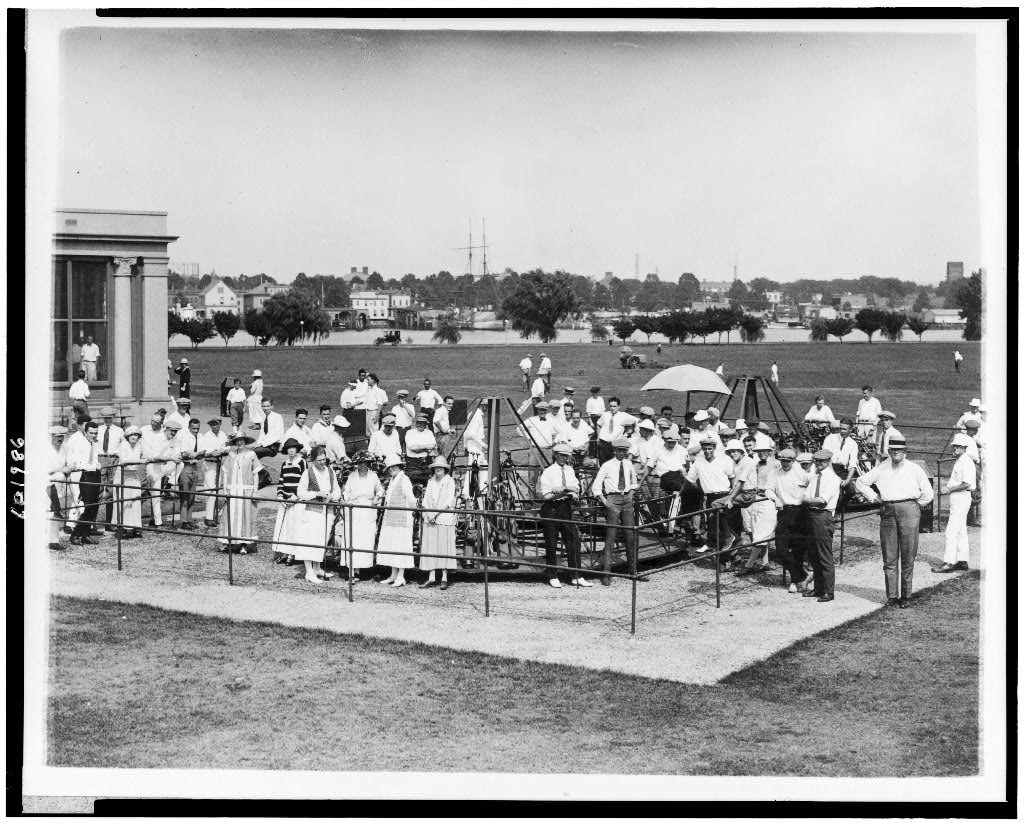
For most of golf's 600-year history there was no tee. Players formed a small cone of damp sand or earth on the tee box and balanced the ball on top. Caddies carried a sand box or "sandboy" for this purpose. The practice was tedious, messy, and inconsistent.
1889: Bloxsom and Douglas patent the first golf tee in Scotland
The world's first patented golf tee came from William Bloxsom and Arthur Douglas, two Scots, in 1889. Their design predated Grant's American patent by a full decade. The Scottish tee was less commercially successful, but the historical record is clear: the first patent is theirs.
1899: Dr. George F. Grant patents the first American wooden tee
On December 12, 1899, the United States Patent Office issued US Patent No. 638,920 to Dr. George Franklin Grant, a Boston dentist, the first Black faculty member at Harvard University, and an avid golfer. His invention was "designed to produce a simple, cheap, and effective tee for use in the game of golf, obviating the use of the usual conical mounds of sand."
Grant's tee was a vertical rubber tube attached at its base to a carrot-shaped piece of wood. Push it into the ground; the rubber cup holds the ball. He never commercialized the design. He died suddenly in 1910. The USGA formally recognized Dr. Grant as the original inventor of the wooden tee in 1991.
1921 to 1925: William Lowell and the Reddy Tee
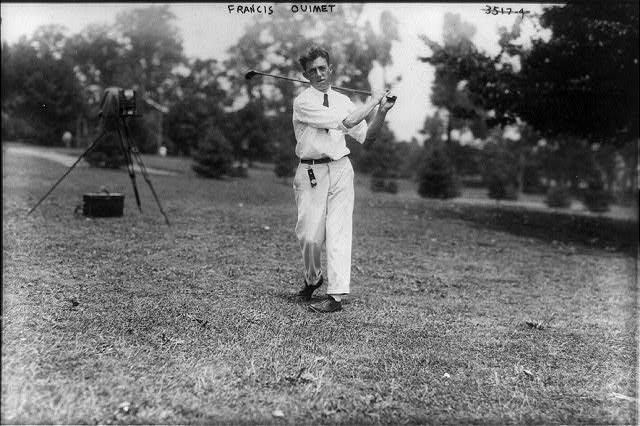
The tee that actually became standard came from another dentist, this time in Hoboken, New Jersey. William Lowell Sr. developed and patented the one-piece wooden peg with a concave platform at the flared top: the shape every golfer recognizes today as the "Reddy Tee."
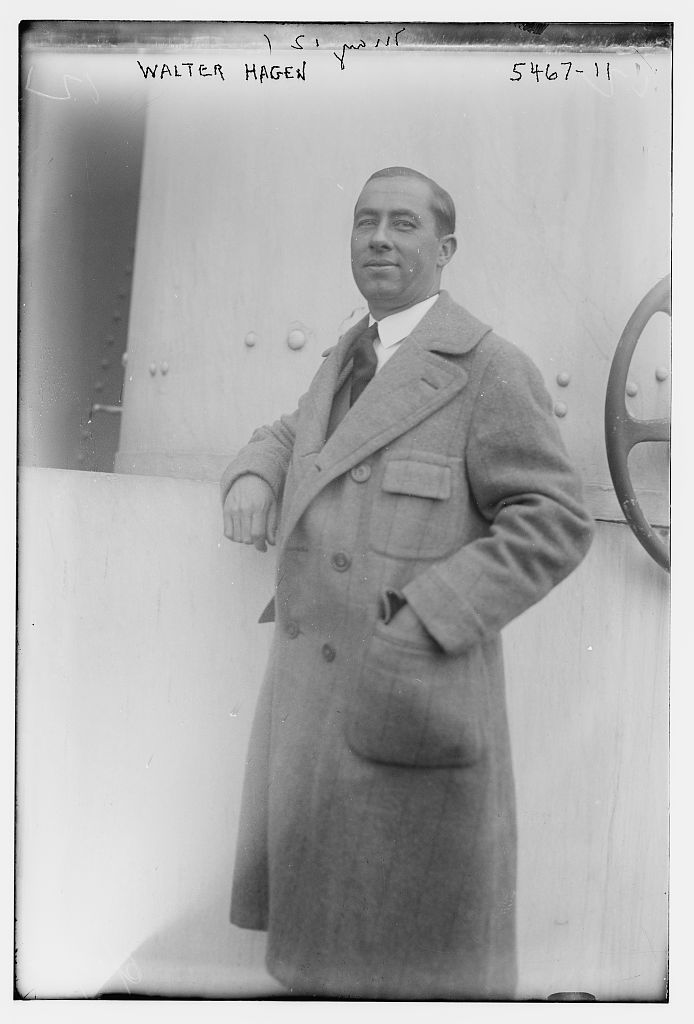
Lowell's commercial breakthrough was a 1922 deal with Walter Hagen and Joe Kirkwood Sr. to use his tees during their exhibition tour. The publicity moved product fast. Lowell signed a 1922 deal with the A.G. Spalding Company for 24 dozen Reddy Tees, and by 1925 he was selling $100,000 worth of tees (about $1.8 million in 2026 dollars).
The first Reddy Tees were green; Lowell switched to red, which gave the product its commercial name. Lowell's patent was granted on May 13, 1925, six years after Grant's original.
1971: Alan Shepard tees off on the Moon
On February 6, 1971, Apollo 14 commander Rear Admiral Alan B. Shepard Jr. hit two golf balls off a makeshift tee (a Wilson 6-iron clubhead attached to the handle of a sample collection tool) on the lunar surface. The USGA Golf Museum holds the replica club.

Post-1970s: plastic, then composite
Mass-market plastic tees (HDPE, polypropylene) appeared in the 1970s and 80s. They were cheaper, more durable than wood, and far more polluting. Bamboo composite tees followed in the 2000s as a "sustainable" wood alternative. None of these changed the fundamental geometry: still a single-height peg, still designed for a soil tee box.
2010s: simulator golf demands a new tee category
The rise of home golf simulators (SkyTrak in 2014, FlightScope Mevo in 2017, Garmin R10 in 2021, Bushnell Launch Pro in 2022) created a problem the wooden tee could not solve. Synthetic hitting mats do not accept wooden tees. Surface-sitting alternatives appeared: BirTee, Tomahawk NEO, Tee Claw, Birdie Cube. Each addressed part of the problem.
2026: the tethered, on-grass-height tee
Better Golf Tee combines three things no prior product brought together: (1) a surface-sitting seat where the ball balances on four open points so the club gets under it cleanly, with zero mat penetration, (2) three heights calibrated to on-grass ball-bottom positions, (3) a tethered caddy system that prevents flyaway and makes the system portable.
The throughline
Every tee innovation has come from someone trying to solve a practical, often unglamorous, problem. Sand was messy. Wood broke. Plastic did not biodegrade. Mat tees popped out and got lost. Each generation gets one step closer to a tool that disappears into the swing.
Who invented the golf tee?
Dr. George F. Grant, a Boston dentist and Harvard faculty member, patented the first wooden golf tee in 1899 (US Patent 638,920). William Lowell Sr. later patented the modern wooden tee design in 1925 and made it commercially successful as the Reddy Tee.
What is the oldest golf tee patent?
US Patent 638,920 to Dr. George F. Grant, issued December 12, 1899.
Did Alan Shepard really hit a golf ball on the moon?
Yes. On February 6, 1971, during Apollo 14, Shepard hit two golf balls with a makeshift club. NASA's photography of the mission is in the public domain.